
Solar heat rejection film
Heat Control Window Film for Chicago Homes
Chicago summers are shorter than in the South, but they are hot and sticky, and some rooms take the brunt of it. Heat control window film stops a share of solar energy at the glass so those rooms stop running hotter than the rest of the home.
 Chicago
Where Chicago Homes Overheat and Why Heat Control Film Helps
The hot spots are predictable. Top-floor units in two-flats and three-flats sit under flat roofs that absorb sun all day, and their rear windows often face south or west across open yards. Dormer bedrooms in bungalows trap warm air under the roof. High-rise units have walls of glass with no shade at all, and east-facing lakefront condos can feel warm by nine in the morning.
Window air conditioners are common in older Chicago housing, and they struggle when sun is pouring through the window right beside them. Heat control film reduces the solar load coming through that glass, which lets the unit or central system catch up instead of running all afternoon and still leaving the room stuffy.
What film does not do is lower humidity. Chicago's muggy July days still need air conditioning or a dehumidifier. Film reduces the heat source; it does not replace the equipment.
Types of Heat Control Window Film Used in Chicago
Heat control films fall roughly into three groups. Dyed and lightly tinted films absorb some solar energy and mainly reduce glare. Reflective films use thin metal layers to bounce a large share of solar energy back outside, and they look mirrored from the street in daylight. Spectrally selective films use ceramic or multilayer coatings to target infrared while letting most visible light through.
For most Chicago homes, spectrally selective and light reflective films are the main candidates. Selective films suit owners who care about a clear view and a natural look from the sidewalk, which is often the case on greystone and bungalow blocks. Reflective films reject more total heat and suit high-rise units where the exterior look is set by the building and the sun exposure is severe.
When comparing products, look at two figures. Total solar energy rejected (or its mirror, the solar heat gain coefficient for film plus glass) says how much heat stays out, and visible light transmission tells you how much darker the room will look.

Keeping Winter Sun While Cutting Summer Heat in Chicago
A film that blocks summer heat also blocks some winter sun. In Chicago that tradeoff matters, because a sunny south room in January provides real warmth. We handle it two ways. First, we focus heat control film on west glass, which takes the most punishing summer sun and contributes less useful heat in winter. Second, on south glass we favor selective or low-E films that reject infrared while keeping more visible light.
In practice a Lakeview two-flat might get a stronger film on the west-facing rear porch windows and a light selective film on the south front, while the north side stays untreated. That kind of split usually gives the best year-round result.
Heat Control Film on Dual-Pane and Older Chicago Windows
Glass type limits film choice. Single-pane glass in vintage buildings tolerates most heat control films. Dual-pane units, especially large ones and those with existing low-E coatings, can be stressed by highly absorptive film, because the inner pane heats up and the edge of the glass, buried in a cold frame, stays cooler. That temperature difference is what causes thermal stress cracks.
We check every window before choosing. Older vinyl replacement windows common in Pilsen and Edgewater rehabs, original steel casements, and modern high-rise insulated units all get matched to films their glass can handle. Sometimes that means a slightly less aggressive film, which is a better outcome than a cracked pane in February.
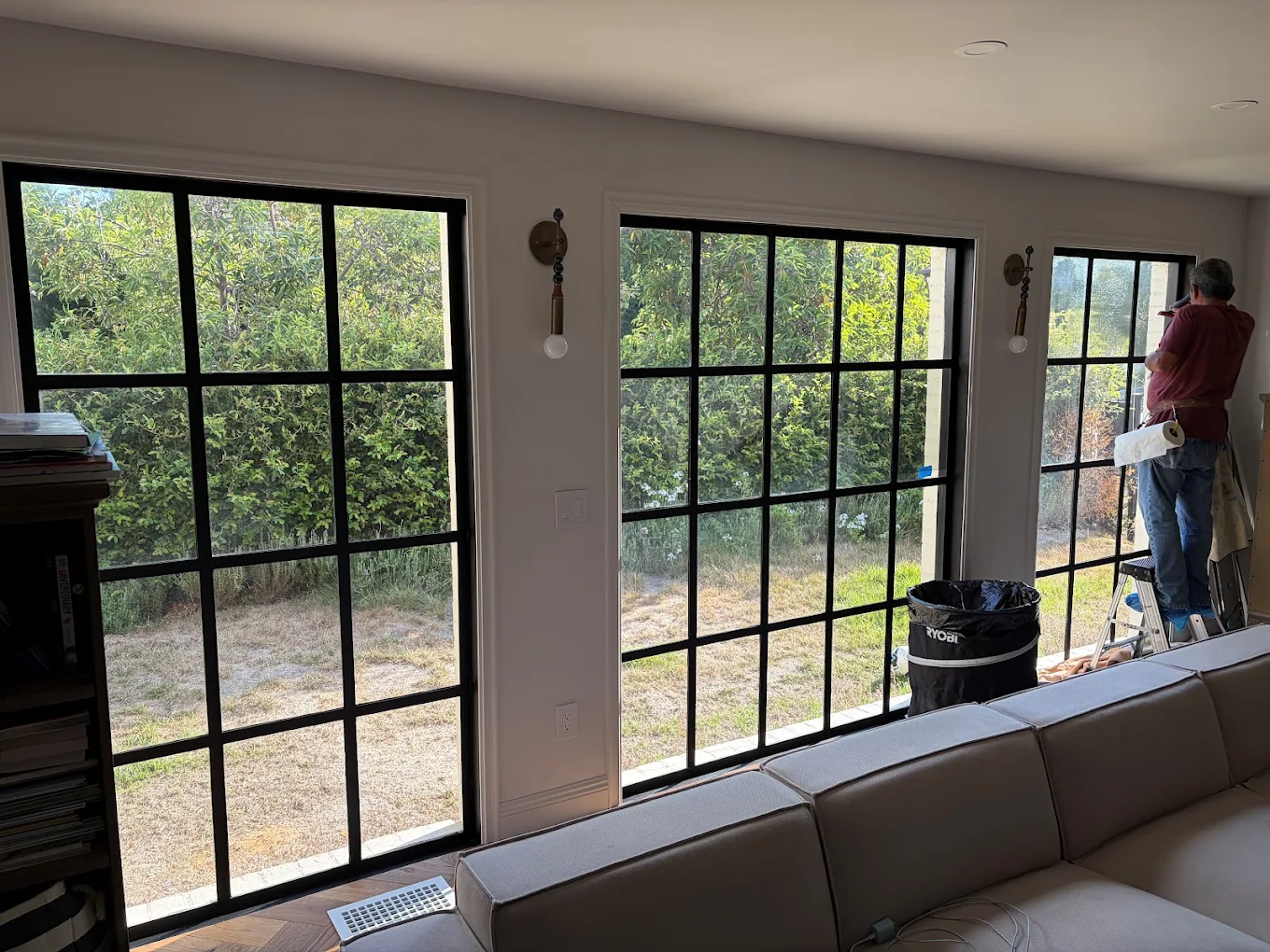
What Heat Control Window Film Does in Chicago Homes
Lower Peak Temperatures in Top-Floor Chicago Units
Rooms under the roof and behind west-facing glass heat up more slowly and peak lower. Upper units in Wicker Park three-flats and Lakeview two-flats are where owners usually notice the difference first on a 90-degree afternoon.
Heat Control Film That Lets AC Keep Up
With less solar heat coming in, window units and central air spend less effort fighting the sun and more on cooling and drying the air. That means fewer hours of compressor run time on ComEd's meter during the hottest weeks.
Comfortable Seating Near Chicago Windows
Sitting next to sunny glass in July can feel like sitting next to a heater. Film reduces the radiant heat coming off the window, so the chair by the window becomes usable again in the afternoon.
Heat Rejection Without a Dark Look
Spectrally selective films reject a large share of infrared while staying light, so a greystone or bungalow facade looks unchanged from the sidewalk and the room keeps its daylight in winter.
Chicago Heat Control Window Film FAQs
Is heat control window film worth it with Chicago's short summers?
For rooms that overheat, usually yes. The worst months are short, but the rooms that suffer suffer a lot, and film keeps working every summer for years. For north rooms and shaded glass, it is usually not worth it.
Will heat control film make my rooms colder in winter?
Heat film reduces winter solar gain too. That is why we put the stronger films on west glass and use lighter selective or low-E films on south windows that warm the house in winter.
Does heat control film reduce humidity?
No. It reduces the heat coming through glass, not the moisture in the air. You still need AC or a dehumidifier on muggy days, but they will have less solar heat to fight.
Can heat control film go on a high-rise condo window?
Usually yes, if the association allows it and the film is compatible with the insulated glass. Many towers have rules about exterior appearance, so we pick from neutral films or the building's approved list.
Heat Control Window Film Service Areas in Chicago
Window film quote
Price Heat Control Window Film for Hot Chicago Rooms
Tell us which rooms overheat and what time of day it gets bad. With window sizes and directions from the quote form, or from an email to info@windowfilmchicago.pro, we can suggest a film for each side.
Prefer email? info@windowfilmchicago.pro